- Home
- >
- Achievements
- >
- 4th Hong Kong Youth Aerospace Innovation Competition
4th Hong Kong Youth Aerospace Innovation Competition
Date: 13/06/2025
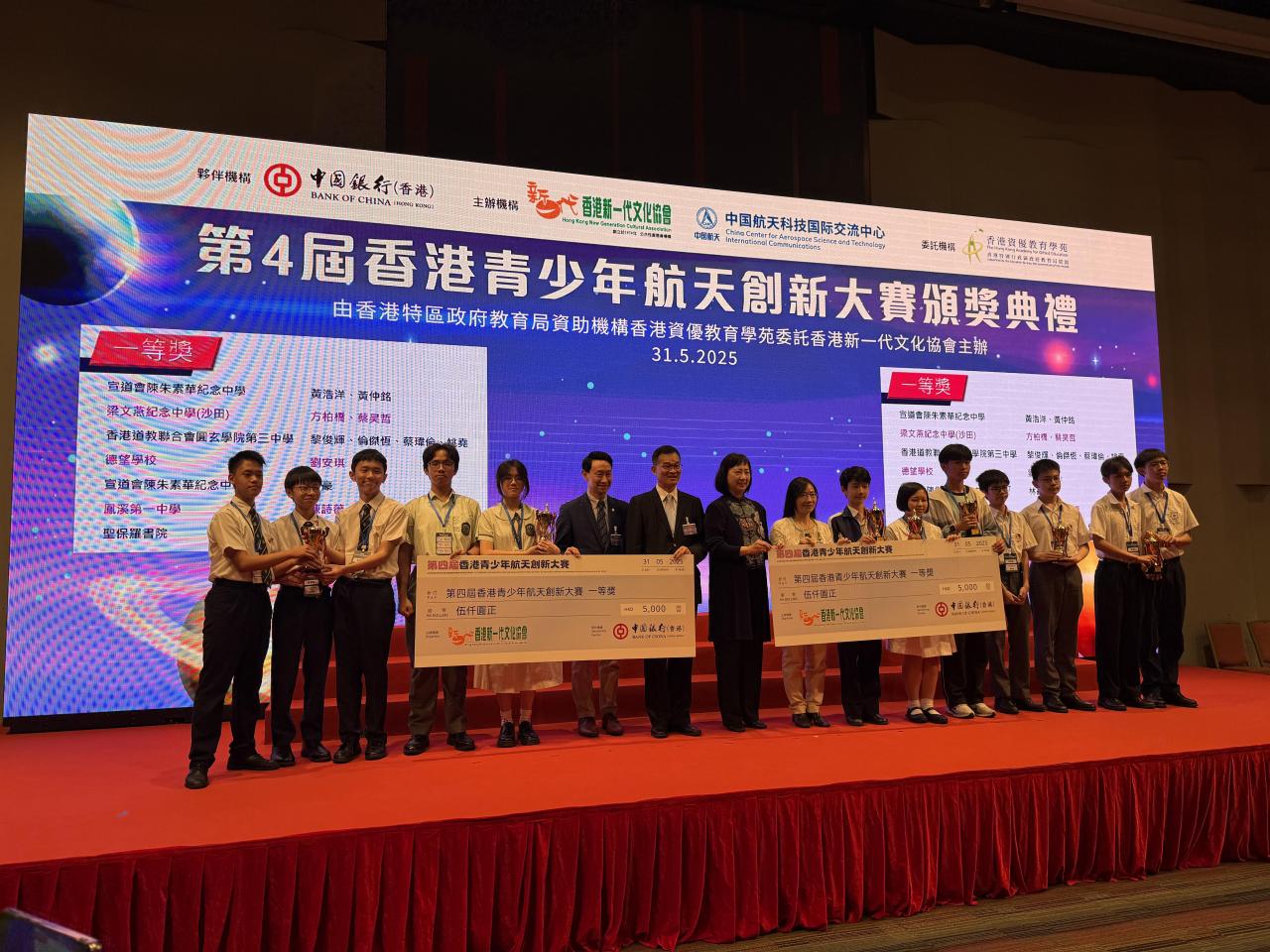
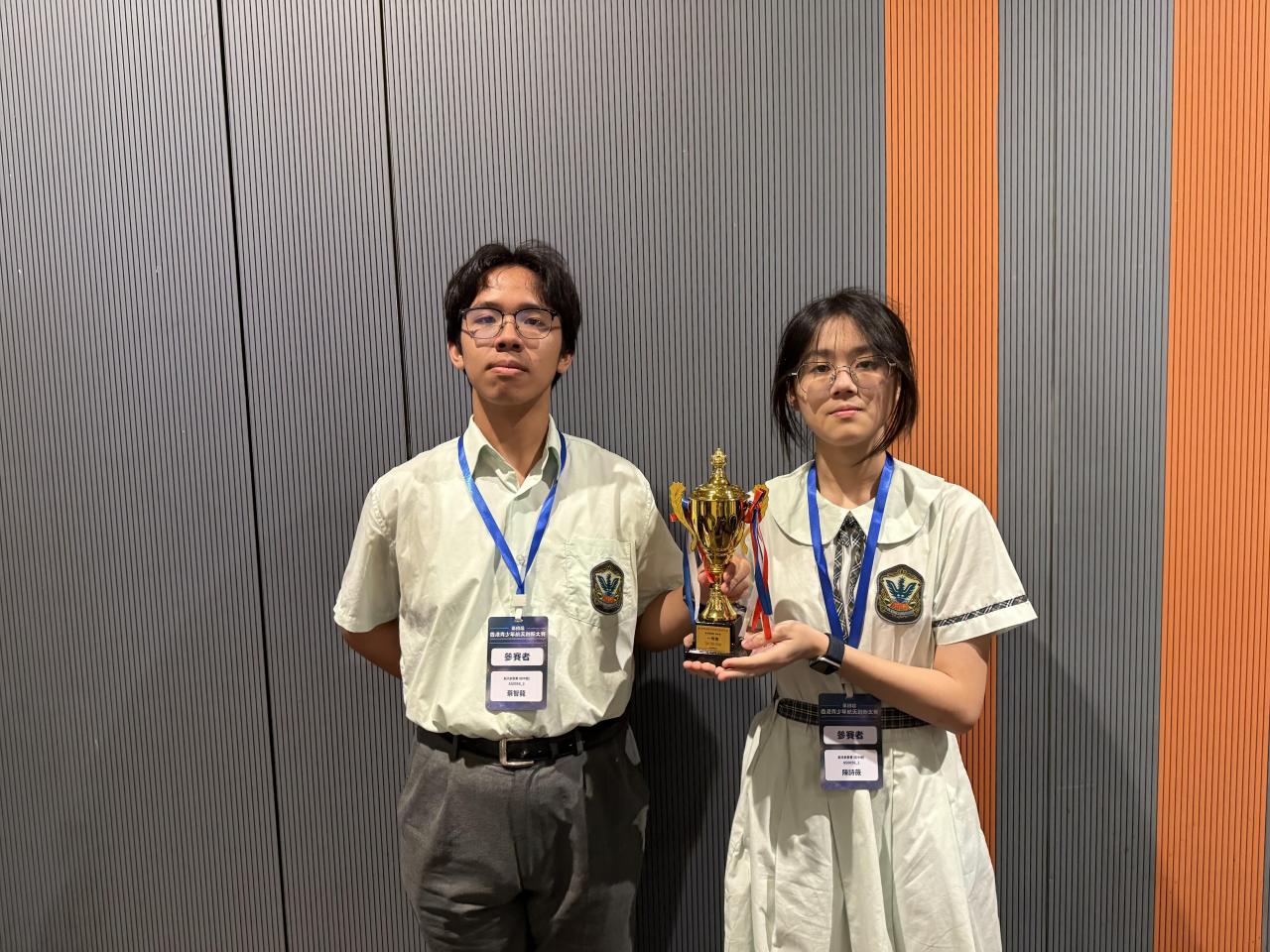
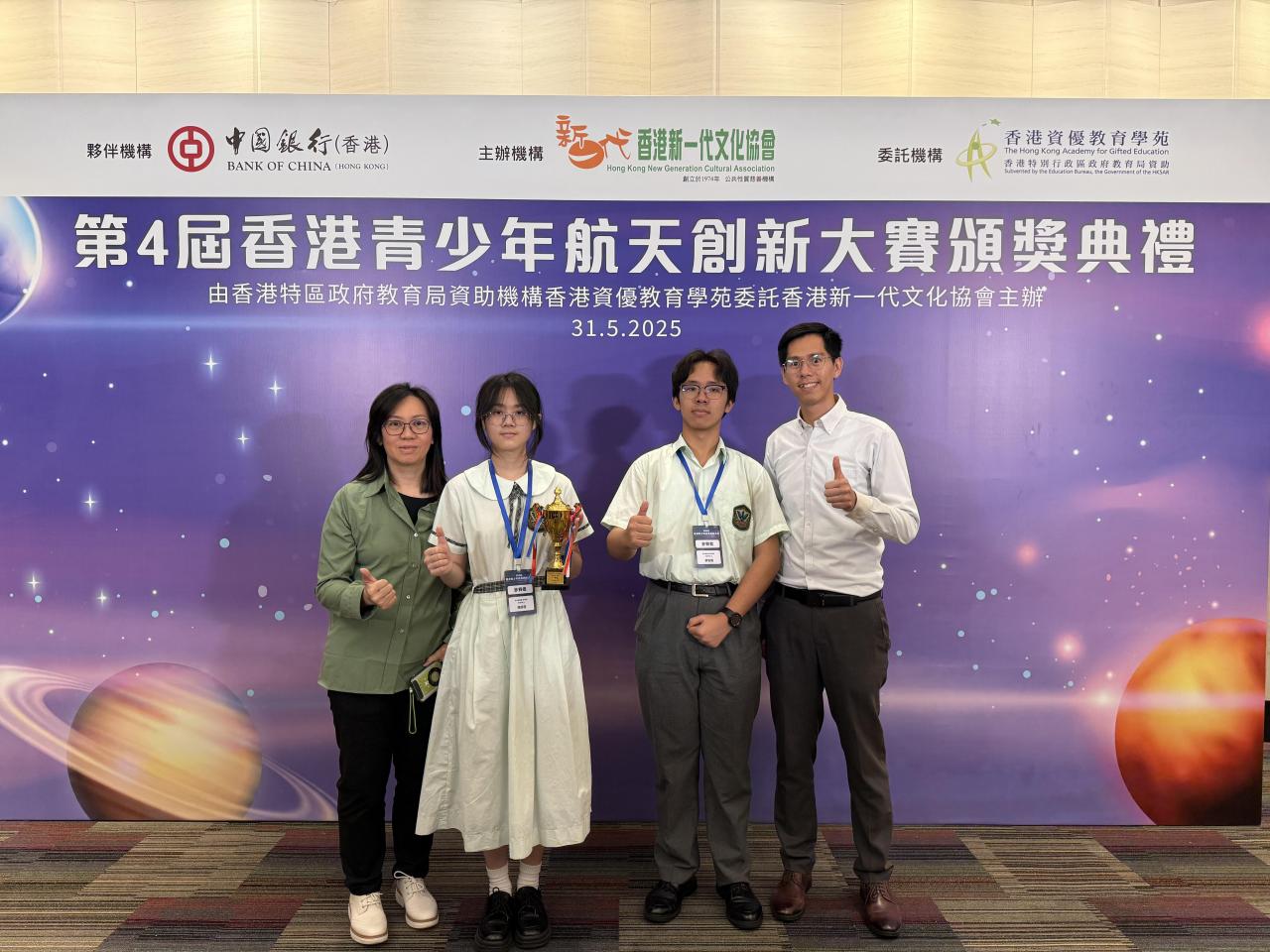
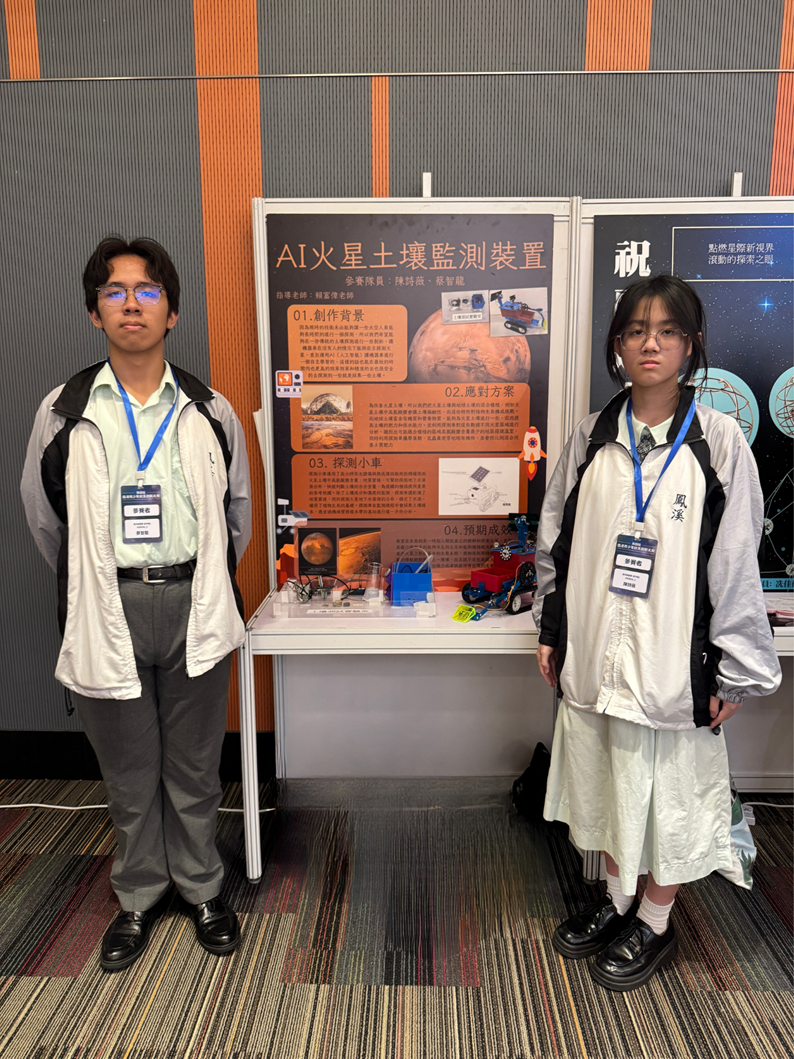
Members of our school's STEAM team—3B OU PUI YU , 3C CHEN SHIMEI, and 3D CHOI CHI LUNG — won the First Prize in the Junior Secondary Creative Category with their project "AI Mars Soil Detection Device" at the "4th Hong Kong Youth Aerospace Innovation Competition" organized by the Hong Kong New Generation Cultural Association. This achievement qualifies them to represent Hong Kong in the "2024-2025 National Youth Aerospace Innovation Competition," where they will exchange ideas and learn from aerospace talents across the country, broaden their horizons, and bring honor to Hong Kong.
The "4th Hong Kong Youth Aerospace Innovation Competition" serves as the Hong Kong regional selection for the "2024-2025 National Youth Aerospace Innovation Competition," identifying the most outstanding projects to form the "Hong Kong Special Administrative Region Team" for the national event. The competition features three categories—Aerospace Creativity, Space Exploration Challenge, and Aerospace Science Inquiry with Innovative Design—comprising a total of 13 events.
The Aerospace Creativity category focuses on aerospace-related creative design, aiming to spark participants' interest in aerospace, enhance their understanding of aerospace science principles, and encourage the development and presentation of innovative solutions to aerospace-related problems. Our students' award-winning project, the "AI Mars Soil Detection Device," addresses key challenges in Mars soil cultivation. By constructing a monitoring network similar to Earth's Internet of Things, the project utilizes small base stations and AI-driven rovers to analyze soil composition, humidity, and underground water distribution. The rovers are equipped with thermal imaging, spectrometers, and geological radar to rapidly detect moisture, perchlorate content, and groundwater resources, while sample analysis optimizes soil formulas. The system dynamically adjusts detection strategies to identify suitable planting areas, providing technical support for future Mars agriculture.